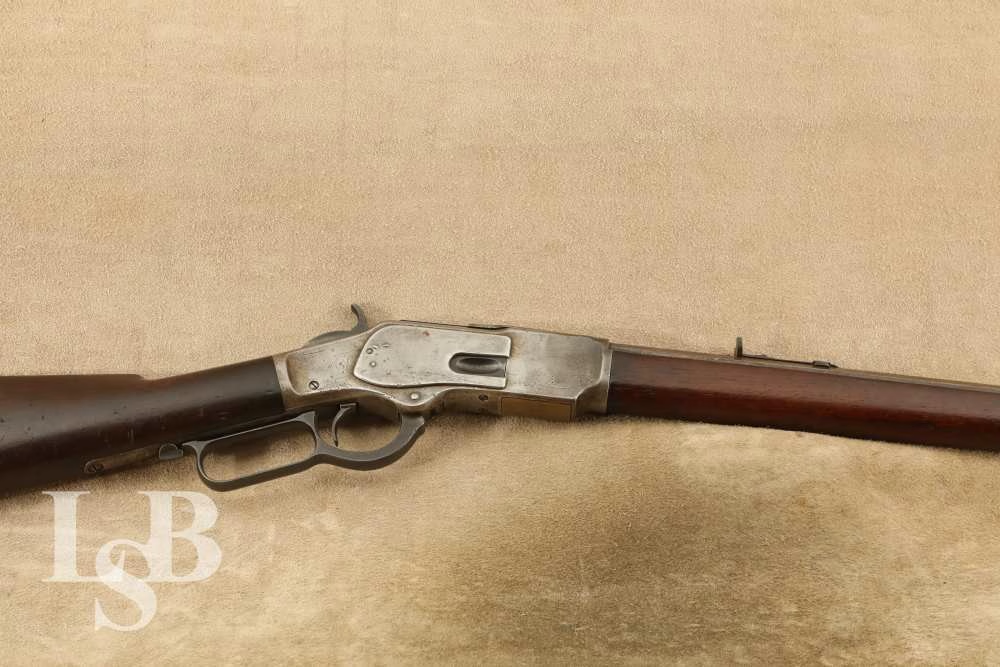
Winchester 1873 3rd Model .32-20 WCF Lever Action Rifle 1890 Antique
SOLD FOR: $1,225.00
LSB#: LSB260422MR003
Make: Winchester
Model: 1873 Rifle Third Model
Serial Number: 351892B
Year of Manufacture: 1890 / Antique
Caliber: .32-20 Winchester Center Fire
Action Type: Lever Action with Tubular Magazine
Markings: The top of the barrel is marked “WINCHESTER REPEATING ARMS NEW HAVEN. CONN. U.S.A. / -KING’S IMPROVEMENT PATENTED MARCH 29. 1866. OCTOBER 16 1860.-”. The lower tang is marked “351892 B”. The top tang is marked “-MODEL. 1873.-“. The bottom of the lifter is marked “.32 CAL”.
Barrel Length: 24” Octagonal Barrel
Sights / Optics: The front sight is a brass blade set between a base, dovetailed to the barrel. The rear sight is a v-notch semi-buckhorn elevator sight dovetailed to the barrel. The top tang is drilled, tapped, and filled for a tang sight (none present).
Stock Configuration & Condition: The stocks are two-piece smooth walnut with capped forend, straight grip, straight comb, and crescent buttplate. The stocks have scattered nicks, dings, chips, scuffs and scratches. There is a crack on the left side of the forend at the cap. There is a small repair on the bottom of the forend at the cap. There is some grain splitting on the bottom of the forend at the receiver. The LOP measures 12 7/8” from the front of the trigger to the back of the buttplate. The plate has worn to a dark patina and has corrosion throughout. Overall, the stocks rate in Good condition as refinished antique.
Type of Finish: Case Color, Blued.
Finish Originality: Original
Bore Condition: The bore is dull and the rifling is defined where not interrupted by erosion. There is mild to modest erosion and pitting throughout the bore. In this writer’s opinion the bore rates 4 or 5 out of 10.
Most antique firearms have bores that will show erosion. This is not only due to age but to the use of black powder. When fired, black powder reacts corrosively. NRA Antique Firearm Conditions Standards are quite lenient for bores. In some cases, the NRA standards disregarded the bore’s condition for collectors’ firearms.
Overall Condition: This rifle retains about none of its original finish. Most of the finish has worn to white and taken to a grey mottled patina. There is intermittent oxidation and light erosion. The case color has completely muted to a silver tone. There are scattered nicks, dings, scuffs and scratches with tool marks around some screw heads. The markings are clear. Overall, this rifle is in about Fair condition as Antique.
Mechanics: The action functions correctly. We have not fired this rifle. There is a lever lock on the lower tang. As with all used firearms, a thorough cleaning may be necessary to meet your maintenance standards.
Box, Paperwork & Accessories: None.
Our Assessment: The Winchester Model 1873 is among the most consequential lever-action rifles ever produced — the arm that earned the enduring epithet “The Gun That Won the West” and defined repeating rifle technology for a generation of Americans. Introduced in 1873 as the successor to the Model 1866, the ’73 brought iron receiver construction, a redesigned loading gate, and compatibility with the era’s most popular handgun cartridges, allowing frontiersmen, lawmen, and outlaws alike to standardize pistol and rifle ammunition on a single chambering. The Third Model, produced from approximately 1884 through the end of the run, incorporated the dust cover, improved finger lever, and refined lockwork that represent the mature, fully developed expression of the 1873 design. Serial number 351892B dates to 1890 production — the final decade of the frontier era — and is chambered in .32-20 WCF, a cartridge prized by the period’s small game hunters and target shooters for its flat trajectory and mild recoil. As a pre-1899 manufacture firearm, this rifle qualifies as a federally defined antique, requiring no FFL transfer for eligible purchasers.
This example presents as a genuine, well-worn survivor carrying the honest patina of 135 years of American history. The metal has shed its original finish entirely, settling into a grey mottled tone with intermittent oxidation consistent with a working antique, while the case color has faded fully to silver — expected and entirely authentic for a rifle of this age and provenance. The bore rates a candid 4-5/10 with mild to modest erosion, appropriate for a black powder-era arm. The walnut stocks show the accumulated character of a used frontier-era rifle — nicks, dings, a forend crack, and a small repair at the cap. The markings remain clear, the action functions correctly, and the lever lock on the lower tang is a period detail worth noting. For the Winchester collector who values authenticity over cosmetics, a functionally sound Third Model in original, unrestored condition with legible markings is precisely the kind of honest antique that becomes harder to find with each passing year — bid accordingly. – L.S.