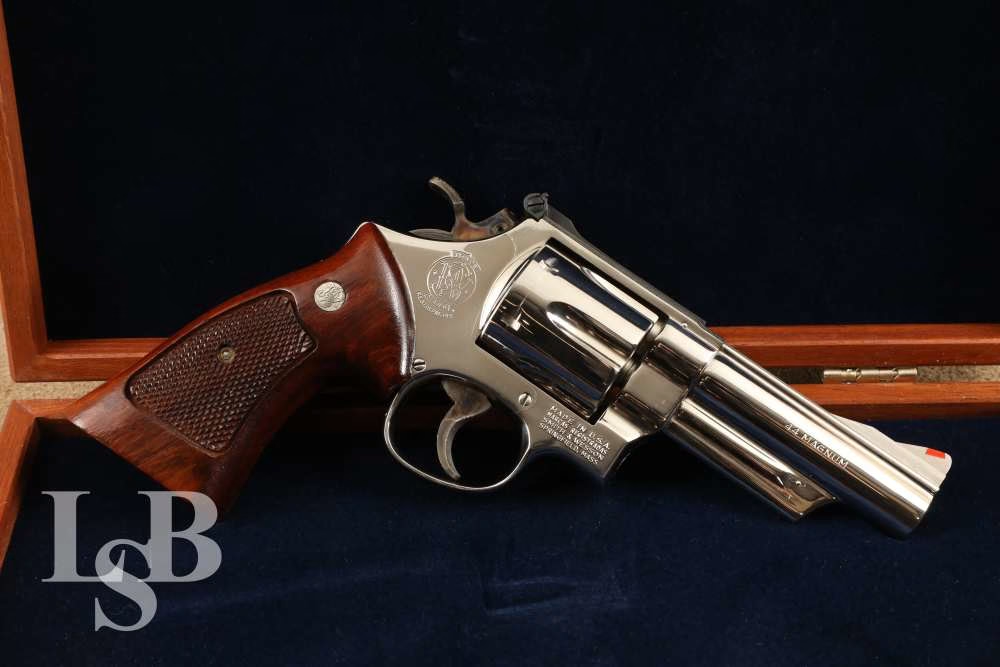
Smith & Wesson Model 29-2 Nickel 4″ .44 Magnum Revolver w/ Case 1979–1980
SOLD FOR: $1,275.00
LSB#: LSB250807SH004
Make: Smith & Wesson
Model: Model 29-2
Serial Number: N629592
Year of Manufacture: Circa 1979–1980 (per Supica & Nahas, Standard Catalog of Smith & Wesson, 4th Edition) Modern
Caliber: .44 Magnum
Action Type: Double Action / Single Action Revolver with Swing-Out Recessed Cylinder
Markings: The left side of the barrel is marked “SMITH & WESSON,” the right side “.44 MAGNUM.” The right side of the frame bears the S&W Trade Mark logo. The yoke cut is marked “MOD. 29-2” and the matching serial number “N629592.” The right side of the frame is marked “MADE IN U.S.A. / MARCAS REGISTRADAS / SMITH & WESSON / SPRINGFIELD, MASS.”
Barrel Length: 4” (Pinned)
Sights / Optics: The front sight is a red ramp blade pinned to a raised boss on the barrel rib. The rear sight is a micro-click Smith & Wesson square notch adjustable for windage and elevation. The right side of the sight blade shows a hard ding that would benefit from repair or replacement.
Stock Configuration & Condition: The factory Gonçalo Alves target grips have football cuts around the escutcheons, sharp checkering, and silver S&W medallions. The finish is deep and rich with minimal handling marks. Both panels fit tightly to the frame, showing no shrinkage or cracks.
Finish Originality: Original Nickel Finish
Bore Condition: The bore is mirror-bright with sharp rifling and no visible erosion. In this writer’s opinion, the bore rates 10/10.
Overall Condition: This revolver retains approximately 98–99% of its original finish. There is a thin, crisp turn line on the cylinder, and the faintest evidence of handling on the nickel surface. The hammer and trigger retain vivid case coloring. The action locks up tight, and the revolver shows evidence of only factory test firing. The presentation case remains excellent, showing minimal exterior wear, with a deep blue felt interior.
Mechanics: The action functions correctly in both single and double action. The timing, lock-up, and trigger break are superb, with the expected glass-smooth pull of late-1970s S&W craftsmanship. We did not fire this revolver. As with all used firearms, a thorough cleaning may be necessary to meet your maintenance requirements.
Accessories: Factory Smith & Wesson walnut presentation case with blue velvet lining and brass hardware.
Our Assessment:
By the late 1970s, Smith & Wesson’s Model 29 had already achieved near-mythic status. Clint Eastwood’s Dirty Harry had made it “the most powerful handgun in the world,” but even before Hollywood fame, it was a masterpiece of American gunmaking—a revolver built for those who wanted power tamed by precision. This particular example, produced between 1979 and 1980, represents the final flourish of the pinned-barrel and recessed-cylinder era, before cost-cutting and design simplification began to reshape S&W’s revolver line.
The Model 29-2 was a gun for the outdoorsman, the lawman, or simply the dreamer—someone who wanted to feel the recoil of authority in their hands. Imagine standing on the ridgeline of a western range at dawn, your breath fogging in the cold air, as the rising sun gleams off the mirror-bright nickel of this .44 Magnum. The case colors on the hammer and trigger catch that same golden light, a testament to the craftsmanship of an age when every revolver leaving Springfield bore a gunsmith’s pride.
Collectors prize the 4-inch configuration for its balance—powerful yet controllable, authoritative yet elegant. The included presentation case reminds us that this revolver was as much a statement piece as a sidearm. In factory condition with evidence of only factory firing, this nickel 29-2 captures the best of the magnum era: American engineering at its zenith, equal parts function, form, and legend.
KF