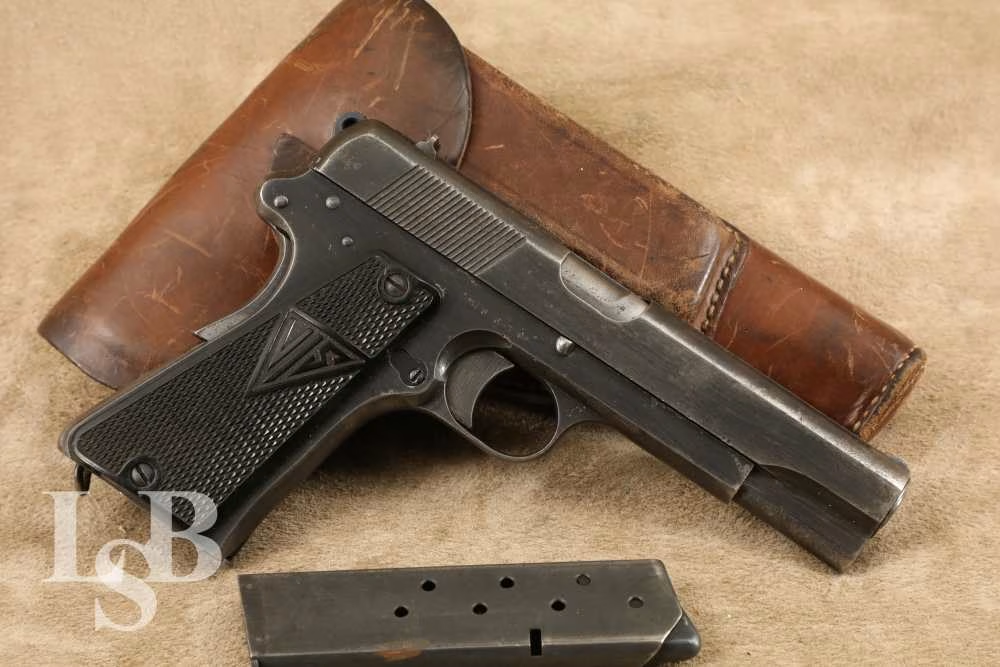
Radom VIS Model 35 P.35(p) 9mm Semi-Auto Pistol, Holster, & Two Magazines
SOLD FOR: $1,225.00
LSB#: LSB250729OS032
Make: Fabryka Broni (F.B.) Radom
Model: VIS Model 35 P.35(p)
Serial Number: H6610
Year of Manufacture: Circa 1941–1942 (German Occupation Production) C&R
Caliber: 9mm Parabellum
Action Type: Single Action, Semi-Automatic Pistol with Removable Magazine
Markings:
The left side of the slide is marked “F.B. RADOM VIS Mod.35 Pat. Nr.1556,” followed by the eagle acceptance and Waffenamt “WaA77” stamps. The frame and slide both bear additional Waffenamt acceptance marks, confirming occupation-era German inspection. The right side of the frame bears the serial number “H6610.” The grips are molded with the classic triangular “VIS” emblem. The holster is marked internally “P.35(p)” beneath a faint Waffenamt and eagle stamp.
Barrel Length: 4 5/8″
Sights / Optics:
The front sight is a small blade integral to the slide. The rear sight is a square-notch dovetailed into the slide.
Stock Configuration & Condition:
The grips are checkered black composite panels, molded with the stylized VIS logo. They appear original to the pistol and show only mild handling wear with no major chips or cracks. The backstrap retains its lanyard loop, which remains intact and functional.
Magazine / Accessories:
This pistol includes two period magazines (unmarked, correct pattern) and a wartime brown leather flap holster with internal “P.35(p)” markings and faint Waffenamt eagle proof. The leather remains supple with typical service wear and darkened edges from use.
Type of Finish: Blued
Finish Originality: Original
Bore Condition:
The bore is bright with well defined rifling. There is only minimal signs erosion. In this writer’s opinion, the bore rates 9/10.
Overall Condition:
This pistol retains much of its original wartime blued finish, with honest thinning on the sharp edges, some holster wear at the muzzle and front strap, and scattered operational marks consistent with field use. The proofs remain clear and legible. The metal surfaces show small areas of light freckling, but no active corrosion. The pistol exhibits the late-war machining marks typical of German-occupied production. Overall, it presents as a very solid and historically correct example of a Waffenamt-accepted VIS 35 service sidearm.
Mechanics:
The action cycles correctly, the slide locks securely, and the safety, hammer, and trigger all function properly during manual testing. We did not fire this pistol. As with all used firearms, a thorough cleaning may be necessary to meet your maintenance requirements.
Box, Paperwork & Accessories:
Includes two 9mm magazines and a wartime brown leather holster marked “P.35(p)” under the flap with faint Waffenamt German eagle acceptance.
Our Assessment:
The VIS Model 35, designed by Piotr Wilniewczyc and Jan Skrzypinski, stands as one of the finest European service pistols of the pre-war and wartime era. When introduced in 1935, it became the standard sidearm of the Polish Army, admired for its Browning-inspired reliability and excellent ergonomics. Following the 1939 invasion, production continued under German occupation at the Radom factory, where it was designated P.35(p)—the “p” denoting “polnisch” or “Polish.” Waffenamt inspectors oversaw production, resulting in pistols like this one bearing the WaA77 acceptance stamp of German Army control.
During the war, early pistols like this H-prefix example retained the full three-lever design (decocker, slide release, and takedown lever), as well as the high-polish blue finish and original Polish markings, before later simplification and crude machining became the norm. These early German-accepted Radoms are prized by collectors for their superior quality, attractive finish, and historical significance, bridging Polish ingenuity with German occupation.
The included “P.35(p)” Waffenamt-marked holster completes the picture, reflecting its service life in WWII Europe. With its matching features, original grips, intact lanyard loop, and bright bore, this pistol represents a remarkable survivor from one of the most complex small-arms stories of the Second World War—a tangible reminder of both Polish craftsmanship and wartime adaptation.
KF