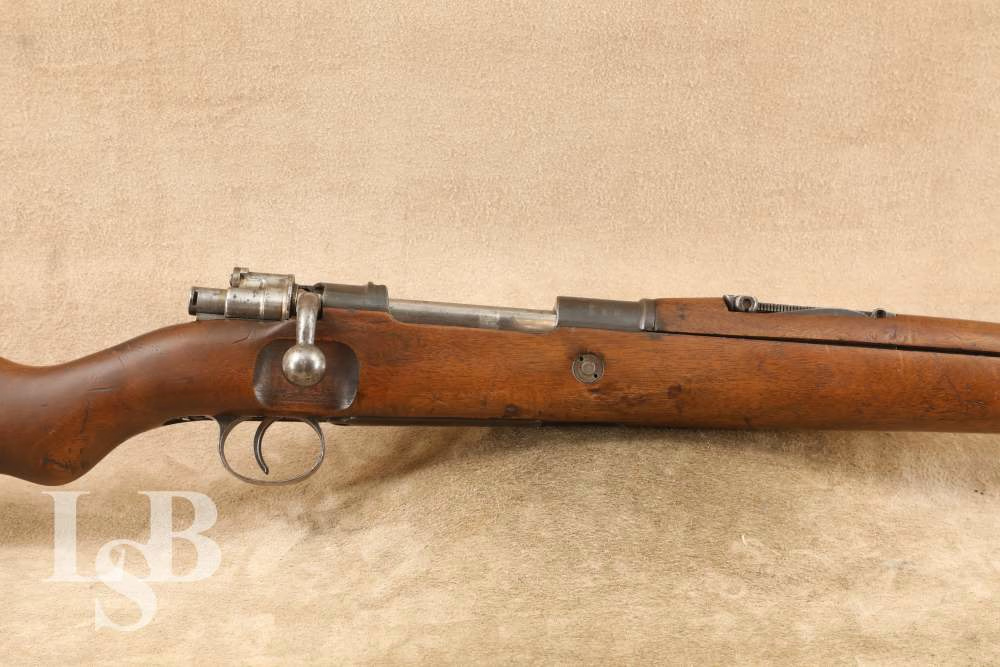
Erfurt K98AZ Carbine 8mm Mauser 23.5” Barrel Bolt Action Rifle, 1916 C&R
SOLD FOR: $1,825.01
LSB#: LSB250930KK003
Make: Royal Erfurt Arsenal, Germany
Model: K98AZ
Serial Number: 3673k
Year of Manufacture: 1916 / C&R
Caliber: 7.92x57mm Mauser
Action Type: Bolt action, internal 5 round magazine
Markings: The top of the receiver has a crown with, “ERFURT 1916”. The left side of the receiver is marked with, “3673k / Kar. 98” and an Imperial Reichsadler. All serialized parts are matched. There are various small proofs throughout.
Barrel Length: 23.5”
Sights / Optics: The front sight is a triangular post dovetailed to a raised winged base. The rear sight is a v-notch sliding escalator assembly marked 1-20.
Stock Configuration & Condition: The stock is a two piece wood set with a capped forend/bayonet lug, stacking rod, barrel band w/ sling bar, through bolt, semi-pistol grip, sling well/passthrough, straight comb, and steel buttplate. There are scratches, pressure dents, and small chips throughout. The LOP measures 13” from the front of the trigger to the back of the buttplate. The stock rates at about Very Good overall condition as refinished.
Type of Finish: Blued
Finish Originality: Original to Arsenal Rework.
Bore Condition: The bore is bright and the rifling is sharp. There is faint erosion in the bore. In this writer’s opinion, this bore rates 8.5/10.
Many military and C&R eligible weapons have bores that will show erosion. This is not only due to age but to the fact that corrosive primers were commonly used in ammunition worldwide. For example, the U.S. used corrosive ammunition throughout WWII. The U.S. military did not begin to phase out corrosive-primed ammunition until the 1950s.
Overall Condition: This rifle retains about 65% of its metal finish. There is thinning, patina, scratches, nicks, and wear marks throughout. The action has moderate wear and the bolt has light spots of patina. The screw heads range from light to moderately tooled. The markings are mostly clear. Overall, this rifle rates in about Very Good condition.
Mechanics: The action functions correctly. We did not fire this rifle. As with all used firearms, a thorough cleaning may be necessary to meet your maintenance requirements.
Box, Paperwork & Accessories: None.
Our Assessment: Adopted in the years leading up to the First World War, the Karabiner 98AZ was Germany’s primary carbine for stormtroopers, cavalry, artillery crews, and specialist troops who needed a shorter, handier weapon than the long Gewehr 98. Built at the Royal Erfurt Arsenal in 1916, this example comes from a period of intense wartime production yet still displays the craftsmanship and attention to detail characteristic of Imperial German arms. The K98AZ incorporated several features that distinguished it from the full-length rifle, including its 23.5 inch barrel, stacking rod, bayonet lug configuration, sling pass-through, and uniquely contoured receiver ring. These carbines saw hard service in trench warfare, making surviving examples with matching serial numbers especially desirable. Chambered in 7.92x57mm Mauser, one of the most influential military cartridges of the 20th century, the K98AZ delivered excellent range and accuracy in a more compact format. Introduced in the 1880s, the 8mm Mauser round became the backbone of German military doctrine and influenced service cartridges worldwide. This rifle’s bright bore with sharp rifling and only faint erosion is impressive for a 1916-dated C&R firearm, and the matching serialized components enhance its historical value. The arsenal rework finish, refinished stock, and visible wear tell the story of a rifle that saw significant handling but was preserved with care.
Today, the K98AZ occupies a special place in both Mauser collecting and WWI history, representing the transitional development that would eventually lead to the Karabiner 98k of the Second World War. Its distinctive configuration, wartime markings, and matching-numbered parts make it an appealing choice for collectors focused on Imperial German arms. This example’s solid mechanics, strong bore, and clear proofs contribute to its significance as a representative of Germany’s frontline carbine during the Great War. -R.E.