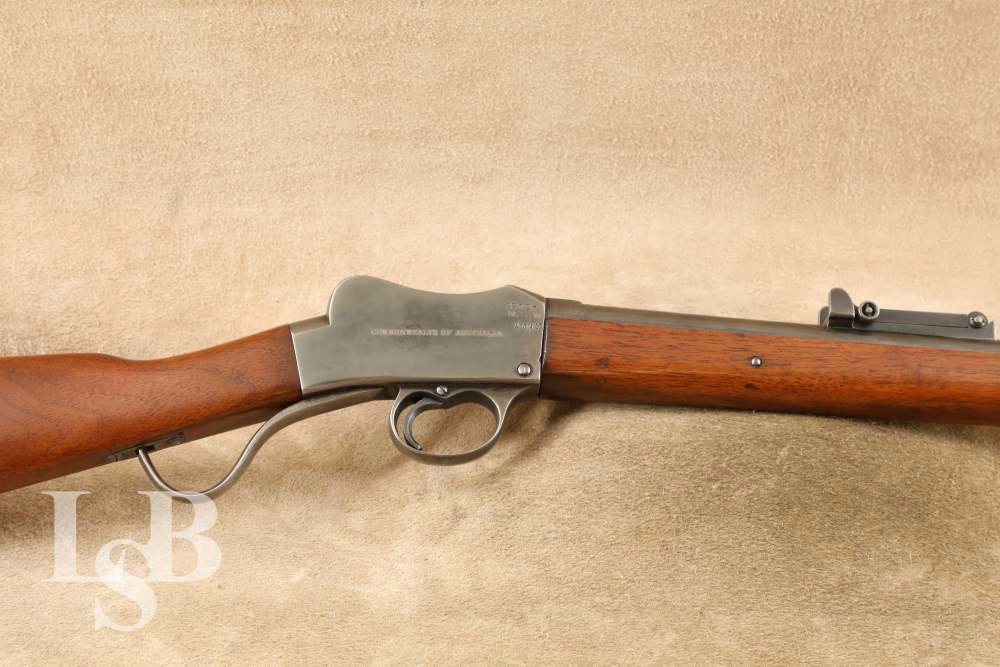
Australian BSA Martini Cadet .32-20 W.C.F 25.25” Barrel Falling Block Rifle
SOLD FOR: $1,556.00
LSB#: LSB251007CL005
Make: B.S.A. Co.
Model: Martini Cadet
Serial Number: 22097
Year of Manufacture: 1911 / C&R
Caliber: .32-20 W.C.F.
Action Type: Falling block, Single Shot, Lever break
Markings: The left side of the frame is marked with a BSA logo and, “MADE BY THE BIRMINGHAM SMALL ARMS Co. Ltd.”. The right side of the frame is marked, “COMMONWEALTH OF AUSTRALIA / N.S.W. 22097”. The barrel is marked with a matching serial number, BSA rollmark and, “32-20 / 310 12-120”. The stock is marked, “C.M.F. N.S.W. 10.426 7/11”.
Barrel Length: 25.25”
Sights / Optics: The front sight is a barelycorn blade on a square base. There is a soldered on extension to the blade. The rear sight is a fully adjustable v-notch set on a tangent block.
Stock Configuration & Condition: The stock is a two piece wood set with a forend cap, barrel band w/ sling loop, straight wrist, straight comb, sling loop, and steel buttplate. There are light handling marks throughout. There are no chips or cracks. The LOP measures 13.5” from the front of the trigger to the back of the buttplate. The stock rates in about Very Good + overall condition as Refinished.
Type of Finish: Blued, Case Color
Finish Originality: Original.
Bore Condition: The bore is bright and the rifling is sharp and well defined. There is some faint erosion in the bore. In this writer’s opinion the bore rates 9/10.
Overall Condition: This rifle retains about 65% of its metal finish. There has been a clear coat a lacquer added to the metal surface. There is moderate thinning and patina throughout. There are handling marks throughout. The action has light wear. The screw heads are mostly sharp with some damaged ones. The pins have light marring. The markings are mostly clear. Overall, this rifle rates in about Very Good condition.
Mechanics: The action functions correctly. We did not fire this rifle. As with all used firearms, a thorough cleaning may be necessary to meet your maintenance requirements.
Box, Paperwork & Accessories: None.
Our Assessment: The Australian BSA Martini Cadet occupies a respected place in Commonwealth military and training history, representing one of the finest small-frame single-shot rifles ever produced. Manufactured by Birmingham Small Arms in 1911, these rifles were issued to Australian cadet forces and state militias for marksmanship training, where durability, accuracy, and simplicity were paramount. The Martini falling-block action proved exceptionally well suited to this role, offering strength, reliability, and smooth operation in a compact, well-balanced platform. Markings indicating service with New South Wales further anchor this example to its original Commonwealth context and early 20th-century Australian military training programs. Chambered in .32-20 Winchester Center Fire, this rifle reflects a common and practical period conversion that allowed surplus cadet rifles to remain useful long after their initial service life. The .32-20 cartridge, introduced in the late 19th century, earned a reputation for mild recoil, excellent accuracy, and versatility in both rifles and revolvers. In a single-shot Martini action with a long 25.25 inch barrel, the cartridge is especially well mannered and efficient. This example’s bore remains bright with sharp, well-defined rifling and only faint erosion, indicating careful use and maintenance over its long life. The adjustable rear sight and modified front blade further suggest a rifle that was intended to be shot rather than merely preserved.
Martini Cadet rifles continue to be highly regarded by collectors and shooters alike due to their mechanical quality, historical background, and adaptability. This example presents with honest wear, a refinished stock, and visible service character while retaining strong mechanical integrity and excellent shootability. The combination of original markings, sound bore, and classic BSA craftsmanship makes this rifle a compelling representative of Australian cadet arms and a practical example of how these rifles were often adapted for continued sporting use well into the 20th century. -R.E.