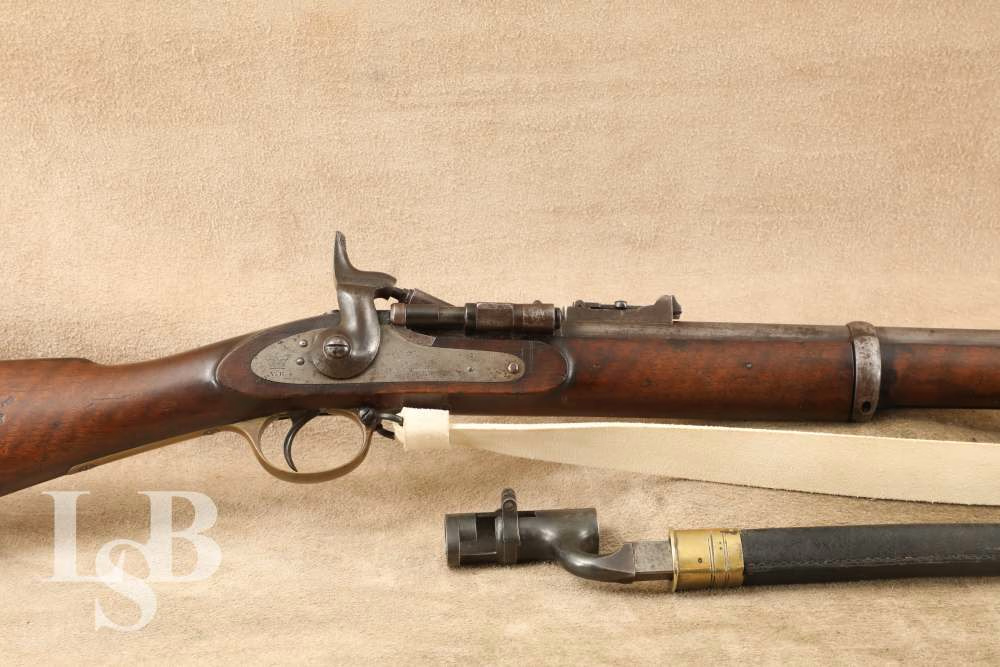
1866 Snider-Enfield .577 Snider Single Shot Rifle 36 1/2″, 1860s Antique
SOLD FOR: $1,400.00
LSB#: LSB251005DL013
Make: Enfield
Model: Snider-Enfield
Serial Number: NSNV
Year of Manufacture: 1866-1880 Antique
Caliber: .577 Snider
Action Type: Single shot, Breech loaded, Hammer Fired Rifle.
Markings: There are British proof marks scattered from the barrel to the breech. Mark I* noted on the barrel ahead of the breech. The lockplate is marked with the Royal Crown VR and “1864 Enfield”
Barrel Length: 36 1/2”
Sights / Optics: The front sight is a shallow barleycorn blade on a square base. The rear sight is a v-notch blade when down and a sliding v-notch blade on a ladder when flipped up.
Stock Configuration & Condition: The stock is a single piece wood with a capped forend, cleaning rod, barrel band w/ sling loop, barrel band, straight wrist, straight comb, and brass buttplate. There are pressure dents and scratches throughout indicative of age and service. The LOP measures 13” from the front of the trigger to the back of the buttplate. The stock rates in about Very Good overall condition as an Antique.
Type of Finish: Brass, Blued
Finish Originality: Original
Bore Condition: The bore is bright and the rifling is pronounced. There is very minor erosion in the bore. In this writer’s opinion the bore rates 9/10 for Antique.
Most antique firearms have bores that will show erosion. This is not only due to age but also to the use of black powder. When fired, black powder reacts corrosively. NRA Antique Firearm Conditions Standards are quite lenient for bores. In some cases, the NRA standards disregarded the bore’s condition for collector’s firearms.
Overall Condition: This rifle retains about 15% of its metal finish. Most of the finish has worn to a brown or silver patina. The brass has darkened due to age and use. The screw heads are tooled but serviceable. The pins have light marring. The markings are sharp. Overall, this rifle rates in about Very Good condition as an Antique.
Mechanics: The action functions correctly, however the fitment is slightly loose. We did not fire this rifle. As with all used firearms, a thorough cleaning may be necessary to meet your maintenance requirements.
Box, Paperwork & Accessories: Sling and Bayonet.
Our Assessment: The Snider-Enfield represents one of the most important transitional military rifles of the nineteenth century, bridging the gap between muzzleloading arms and true metallic cartridge service rifles. Adopted by the British Empire in the mid 1860s, the Snider conversion system allowed existing Pattern 1853 Enfield muzzleloaders to be rapidly and economically converted to breech loading configuration. This example, marked 1864 at Enfield and bearing the Mark I* designation, reflects the earliest and most historically significant phase of that conversion program, a period defined by rapid technological change driven by hard lessons from colonial warfare.
Chambered in .577 Snider, the rifle fires a large, powerful black powder cartridge that delivered substantial stopping power and improved rate of fire over percussion predecessors. The side hinged breech block and hammer fired action provided British infantry with faster reloads and greater battlefield flexibility while retaining familiar handling characteristics. The long 36 1/2 inch barrel, barleycorn front sight, and ladder rear sight are characteristic of British service rifles of the era, designed for volley fire and deliberate long range engagements rather than rapid point shooting.
This example retains approximately 15 percent of its original metal finish, with most surfaces now exhibiting an even brown and silver patina consistent with age and service use. The bore remains bright with pronounced rifling and only very minor erosion present, rating 9 out of 10 for an antique in this writer’s opinion, an exceptional showing for a black powder service rifle of this age. The walnut stock shows pressure dents and handling marks consistent with military use but remains structurally sound, presenting in Very Good condition for an antique. Markings remain sharp and legible, including the Royal Crown VR and Enfield date on the lockplate. Mechanically, the action functions correctly though fitment is slightly loose, and the rifle is accompanied by a sling and bayonet, further enhancing its historical completeness. Overall, this Snider-Enfield stands as a strong and evocative example of Britain’s first successful cartridge service rifle and an important artifact of nineteenth century military history. Please see our high resolution photos and good luck on your bid! MF