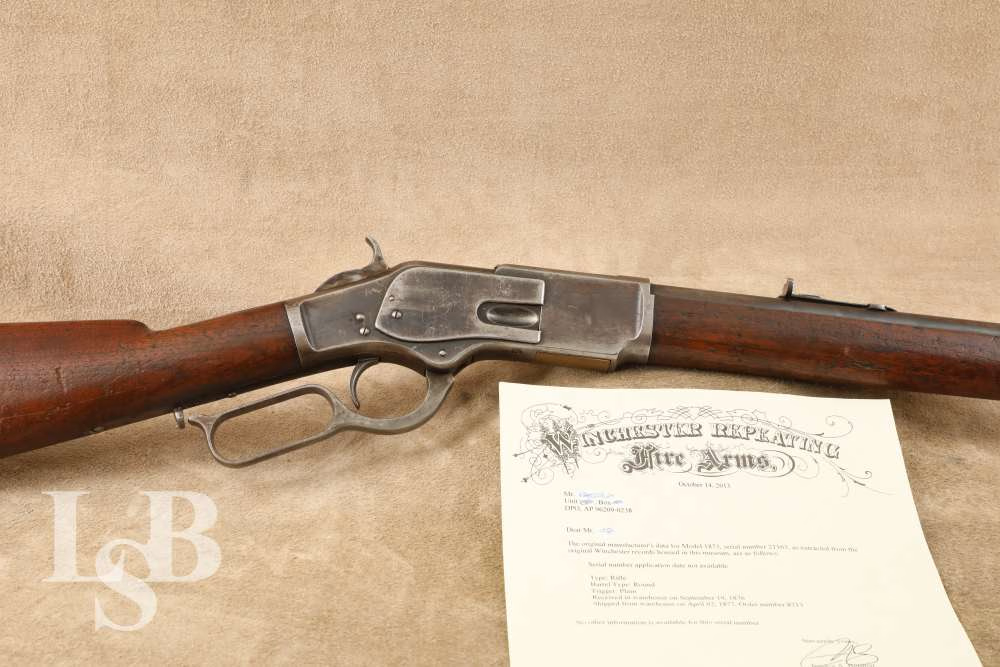
Winchester 2nd Model 1873 .44-40 WCF 24″ Lever Action Rifle, 1877 Antique
SOLD FOR: $3,715.00
LSB#: LSB251001TL003
Make: Winchester
Model: 1873 Rifle 2nd Model with Thumbprint dust cover
Serial Number: 21163
Year of Manufacture: 1877 / Antique
Caliber: .44-40 Winchester (.44 Winchester Center Fire)
Action Type: Lever Action with Full Length Tubular Magazine
Markings: The top of the barrel is marked “WINCHESTER–REPEATING–ARMS–NEW HAVEN–CT/ KINGS–IMPROVEMENT –PATENTED–MARCH 29, 1860 – OCTOBER 16, 1860”. The receiver and the top of the barrel near the receiver is marked with WP proof marks. The Serial number “21163” is stamped on the bottom tang and “—MODEL 1873—” is stamped on the top tang.
Barrel Length: 24” Round barrel
Sights / Optics: The front sight is a German Silver blade dovetailed to the barrel. The rear sight is a “V” notch buckhorn sight on an elevator, dovetailed to the rear of the barrel.
Stock Configuration & Condition: The stocks are two-piece smooth walnut with ,straight grip, straight comb, and crescent buttplate with a sliding door storage compartment for the cleaning rod. (nothing in the compartment). The stocks have significant scattered nicks, dings, scuffs and scratches throughout, some are deeper than others. There is a four-inch long scratch in the right side of the buttstock and there is a small chip on the left side of the forearm. The LOP measures 13” from the front of the trigger to the back of the buttplate. The buttplate has a mottled patina with no remaining finish. Overall, the stocks are in Good condition as an antique.
Type of Finish: Blued
Finish Originality: Original
Bore Condition: The bore is gray. The rifling shows wear with erosion present in the lands, but is generally well defined, sharp in some areas. There is some scattered erosion and pitting in the bore. In this writer’s opinion, the bore rates 7 out of 10 for a black powder Antique.
Most antique firearms have bores that will show erosion. This is not only due to age but to the use of black powder. When fired, black powder reacts corrosively. NRA Antique Firearm Conditions Standards are quite lenient for bores. In some cases, the NRA standards disregarded the bore’s condition for collectors’ firearms.
Overall Condition: This rifle only retains about 10% of its metal finish. Remaining finish is mostly around the edges of the sideplates, loading gate, screw holes and protected areas. The dust cover has turned to a plum patina with traces of blue underneath. There are traces of blue on the magazine near the barrel in protected areas. There are some shallow scrapes on the barrel exterior. There are scattered nicks, dings, and scratches on the sideplates. The screw heads show use but are still sharp. The markings are visible but faint. Overall, this rifle is in about Good to Very Good condition as Antique.
Mechanics: The action functions correctly. We have not fired this rifle. There is a lever lock on the lower tang, and a thumbprint dust cover on the receiver that slides on a guide rail integral to the receiver. As with all used firearms, a thorough cleaning may be necessary to meet your maintenance standards.
Box, Paperwork & Accessories: This rifle includes the accompanying Cody Firearms Museum Winchester factory letter.
Our Assessment: Winchester’s Model 1873 is widely regarded as “The Gun That Won the West,” and examples from the 1870s—such as this 1877-produced 2nd Model—represent some of the earliest and most sought-after variations. The 2nd Model’s defining features, including its thumbprint-style dust cover and early frame architecture, place it firmly within the transitional period between the very first 1873 rifles and the later, more standardized Third Models. Chambered in .44-40 Winchester, the cartridge that became synonymous with the 1873, this rifle reflects a major innovation in American firearms history: the first centerfire cartridge offered by Winchester and the first truly successful rifle-and-revolver pairing. Its black powder heritage also explains the typical throat and bore wear seen on rifles of this era.
This rifle retains authentic frontier character throughout. Only about 10% of the original blue remains, found mostly in protected areas, while the rest has mellowed into an even, service-aged patina. The thumbprint dust cover has developed a rich plum coloration and the walnut stocks show decades of handling with scattered nicks, dings, and a notable long scratch on the right buttstock. The bore, though gray with scattered erosion and pitting, still presents defined rifling consistent with a well-used black powder rifle from the 19th century. Mechanically, the action operates correctly, including the early lever lock and smooth operation of the dust cover. The included factory letter adds important provenance and enhances its historical value.
Altogether, this 1877 Winchester 1873 2nd Model is a genuine survivor from the post-Civil War frontier era—an honest, untouched antique with the wear patterns, patina, and mechanical presence collectors expect from a rifle that likely lived an active working life. Its early features, chambering, and documentation make it an appealing addition to any Winchester or Old West collection. Please see our photos and good luck on your bid! – BF/MA