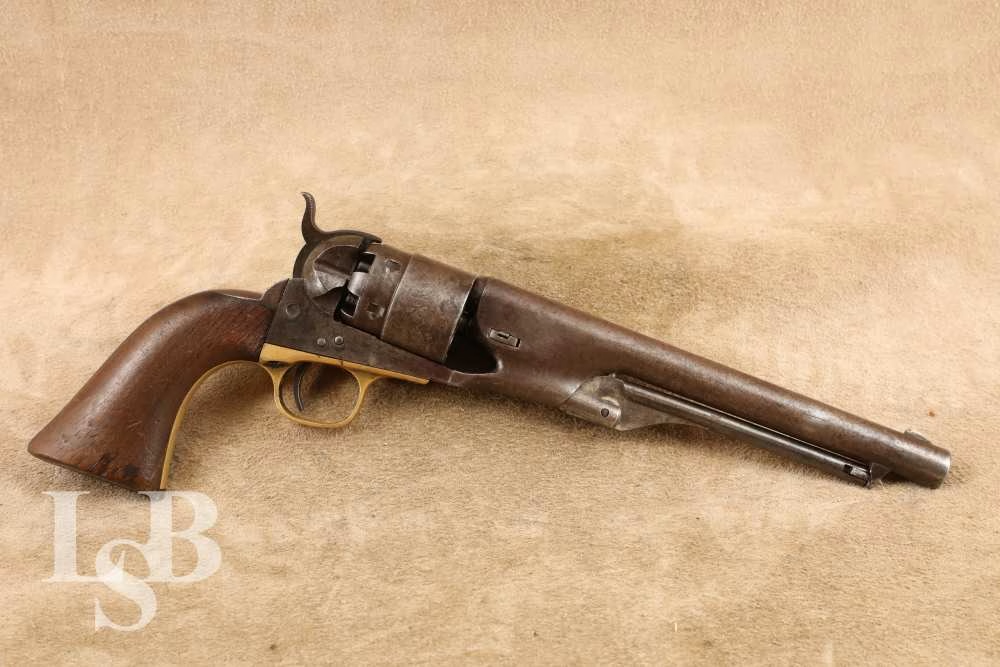
US Civil War Era Colt 1860 Army .44 Cal 8″ Percussion Revolver 1862 Antique
SOLD FOR: $1,676.00
LSB#: LSB250817JK007
Make: Colt
Model: 1860 Army
Serial Number: 72856 (matching on barrel, frame, cylinder, wedge, trigger guard, and backstrap)
Year of Manufacture: Circa 1862 Antique
Caliber: .44 Percussion
Action Type: Single Action, Percussion Cap & Ball Revolver
Markings:
The top of the barrel is marked “ADDRESS COL. SAM L COLT NEW-YORK U.S. AMERICA.” The left side of the frame bears “COLTS PATENT,” and the cylinder is roll-engraved with the faint remains of the naval engagement scene and stamped “COLTS PATENT No. 2856 / PAT. SEPT. 10TH 1850.” The matching serial number “72856” appears on the barrel, frame, trigger guard, backstrap, cylinder, and wedge. A serifed “D” is stamped just above the wedge near the chamber, an “H” is marked on the brass behind the trigger guard, and a “T” is located forward of the wedge on the right side of the barrel. The one-piece walnut grip shows partial inspector cartouches on both flats, now faint but discernible under angled light.
Barrel Length: 8″
Sights / Optics: Fixed front blade; rear sight is a hammer notch.
Stock Configuration & Condition:
The one-piece walnut grip shows an attractive dark patina with flattened checkering at the toe and moderate handling marks from both field use and age. The edges are rounded and smooth from wear, and there’s a small loss toward the toe on the right side. The faint outline of the inspector’s cartouches remains visible on both sides, suggesting this revolver once passed through U.S. Ordnance inspection.
Bore Condition: The bore is dark with well-defined rifling and minimal erosion; in this writer’s opinion, it rates 5/10. There is a bulge in the barrel about 2.5″ in from the muzzle. This is probably evidence of a sqib load that was not cleared before the follow-up shot.
Mechanics:
The single-action lockup is functional, though the loading lever is loose and can be drawn free when manipulated. The right side of the trigger guard is missing one screw. The hammer cocks and releases correctly. We did not fire this revolver. As with all used firearms, a thorough cleaning may be necessary to meet your maintenance requirements.
Finish:
Aged brown-gray patina with scattered pitting and softened edges from honest carry. The cylinder scene remains partially visible, with the naval battle motif still quite discernible. The brass frame and trigger guard show a rich, aged mustard tone. Finish retained approximately 5–10%, consistent with a field-used example.
Accessories: None.
Overall Condition:
This Colt retains matching serial numbers throughout, a strong indicator of authenticity and originality. It shows period wear, a few small losses, and scattered marks consistent with service and long storage. The gun remains solid with a tight wood-to-metal fit and good legibility in all major markings.
Our Assessment:
This is an original Colt 1860 Army revolver—Samuel Colt’s masterpiece of wartime design and one of the most important sidearms of the American Civil War. With over 200,000 produced between 1860 and 1873, these revolvers were issued extensively to Union cavalry and officers. Many were carried by men in blue from Shiloh to Appomattox, earning a reputation for power, reliability, and balance.
Chambered in .44 caliber, the 1860 Army used the same cylinder diameter as the .36 Navy but lengthened to accommodate the heavier charge, giving the revolver striking authority. This example, serial 72856, falls within the mid-war production range—likely shipped from Hartford around 1862. Its markings, cartouches, and matching numbers tell of a revolver that served its time honorably and survived the decades intact.
The even patina, visible cylinder scene, and cartouched grip evoke the kind of revolver that might have hung at the hip of a cavalry trooper riding through the Virginia mud or a staff officer crossing the Tennessee River. Additionally, this revolver is cut for a shoulder stock (none included), with cutouts at each side of the recoil shield, and a notch in the butt strap. It’s an evocative survivor of America’s defining conflict—an artifact with both mechanical grace and historical gravity.
KF