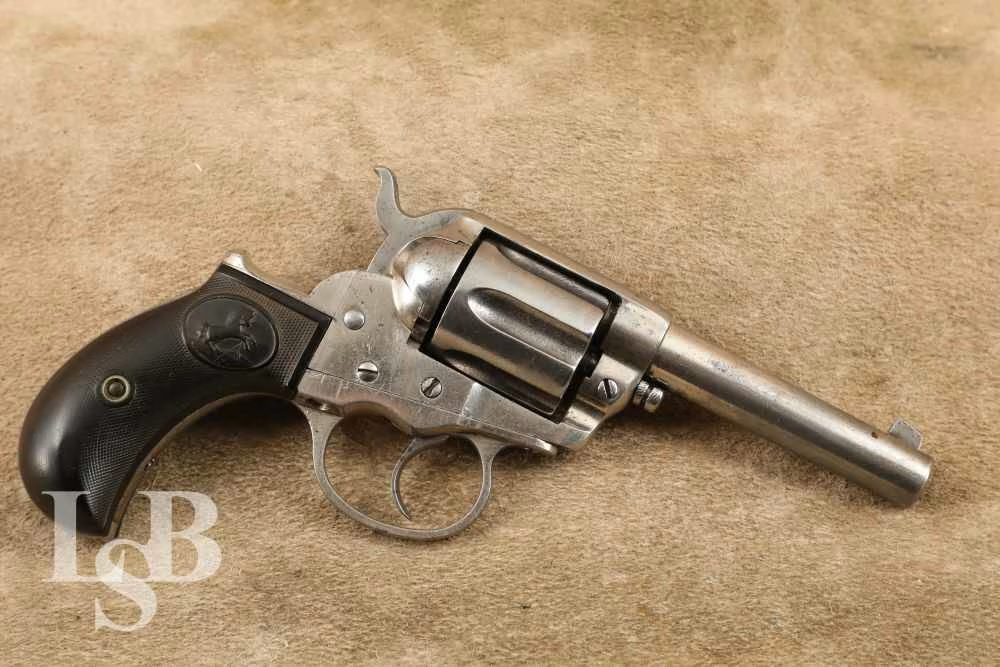
Colt Model 1877 Thunderer Storekeeper .41 Cal. 3 ½” DA Revolver, MFD 1879
SOLD FOR: $1,432.00
LSB#: LSB250817JK005
Make: Colt’s Patent Fire Arms Manufacturing Company
Model: 1877 Thunderer (Storekeeper’s Model)
Serial Number: Frame & Trigger Guard 17761; Backstrap 49065 (Replacement Part)
Year of Manufacture: 1879 (Per Colt Factory Serial Lookup) – Antique
Caliber: .41 Colt
Action Type: Double Action Revolver, 6-Shot, short-frame pocket configuration
Markings: The left side of the frame is marked with three patent dates in three lines: “PAT. SEPT. 19. 1871. / PAT. SEPT. 15. 1874. / JAN. 19. 1875.” The left rear bow of the trigger guard is marked “41 CAL.” The top of the barrel is marked with the two-line “COLT’S PT. F.A. MFG. CO. / HARTFORD, CT. U.S.A.” The frame and trigger guard bear a matching serial number “17761.” The backstrap or butt is mismatched and marked “49065,” indicating a period replacement part.
Barrel Length: 3 ½ Inches (Storekeeper’s Model — short, concealable barrel; no ejector assembly)
Sights / Optics: The front sight is a fixed half-moon blade integral to the barrel. The rear sight is a shallow “V” notch integral to the top strap.
Stock Configuration & Condition: The grips are two-piece black hard-rubber panels with early Colt Rampant Horse medallions. They show handling marks and age polishing consistent with genuine use. No cracks or major chips are observed.
Finish Originality: Re-nickeled (non-factory). Pitting is visible beneath the plating. The refinish does not appear factory, as a factory overhaul would have re-stamped markings, replaced pitted components, or smoothed surfaces before plating.
Bore Condition: The bore is gray with well-defined rifling and minor pin-prick erosion visible under magnification. In this writer’s opinion, the bore rates 7/10.
Overall Condition: This revolver retains about 75% of its re-nickel finish. Pitting is visible beneath the plating, with oxidation in the cylinder flutes and light freckling along edges. The screw heads are worn but functional, and the markings remain legible. The mismatched backstrap shows a different surface tone, consistent with its replacement. This Thunderer presents as a sound, working antique with an honest patina of age and use.
Mechanics: Both double-action and single-action functions operate with expected wear but remain serviceable. The hammer cocks, locks, and releases correctly. The cylinder indexes, though slightly worn, are typical of this model’s complex lockwork. There is no ejector on this Storekeeper configuration; the cylinder rod may be used as a ramrod to assist in removing spent cartridges. The action is complete and restorable. We did not fire this revolver. As with all used firearms, a thorough cleaning may be necessary to meet your maintenance requirements.
Our Assessment:
The Colt Model 1877 Thunderer stands as one of the most storied revolvers of the Victorian frontier era—Colt’s first double-action design, offering speed and power in a compact frame. Introduced alongside its .38 Long Colt sibling, the Lightning, the Thunderer’s .41 Colt chambering delivered a slow, heavy bullet ideal for close-range defense in an age when street lamps were fueled by gas and holsters were stitched by the local cobbler.
This revolver, produced in 1879, bears all the hallmarks of a sidearm that worked for its living. The mismatched backstrap (49065) and non-factory re-nickel finish reveal a gun kept in service through the decades, likely re-plated by a small-town smith to keep corrosion at bay. Beneath the plating lie the faint traces of its long life — pitting, softened screws, and dulled rollmarks — honest scars from a weapon that saw real use rather than display. Its short barrel, lack of ejector, and ramrod-style cylinder pin identify it as the “Storekeeper’s” configuration, prized for its compactness and discretion.
Between 1877 and 1909, roughly 166,000 of these Model 1877 revolvers left Hartford, most in the Thunderer’s stout .41 Colt chambering. The design, the work of William Mason, represented Colt’s first attempt at a self-cocking revolver — mechanical innovation tempered by delicacy of action. It gained notoriety both for its intricate lockwork and its notable users, among them Billy the Kid and John Wesley Hardin, who favored nickel Thunderers for their blend of power and concealability.
Picture this revolver as it was meant to be: resting in the pocket of a shopkeeper locking his door at twilight, or on the hip of a traveler riding the stage between Cheyenne and Denver, its nickel frame reflecting the last light of the lanterns. The .41 Colt it chambered was never elegant, but it was effective — a working man’s assurance in uncertain times. More than a century later, this 1879 Thunderer Storekeeper remains a tangible artifact of that world, where craftsmanship, courage, and survival met at the pull of a trigger.
KF